

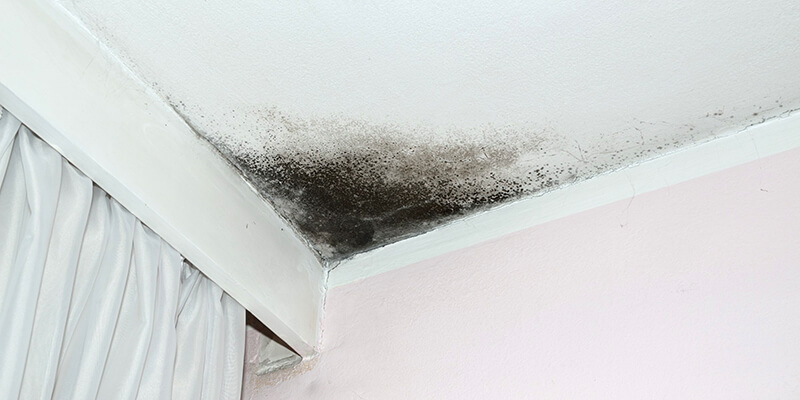
Mold behind drywall is one of those problems that’s usually well underway before you ever see it. By the time a stain bleeds through the paint or the smell gets hard to ignore, it’s often been growing inside the wall cavity for weeks. In a place like Katy — Gulf humidity, a long cooling season, the occasional storm or supply-line leak — the conditions that feed it are just part of life here.
Here’s how to read the early signs, what tends to cause it, and where the line sits between something you can wipe down yourself and something that needs a professional.
Why it shows up behind walls in Katy homes
Mold needs three things: moisture, something organic to feed on, and time. The paper facing on drywall and the wood framing behind it cover the food part. Katy’s climate handles the rest. Humidity that stays high for months keeps wall cavities damp, and any real water intrusion — a slow plumbing leak, a roof drip, an overflowing AC condensate pan, storm water that got in — gives mold everything it needs to take hold somewhere you can’t see.
The hidden spots are the whole problem. Behind baseboards, inside the wall under a window, around a tub or shower surround, near where supply lines run. Out of sight, undisturbed, and damp.
The signs worth paying attention to
- A musty smell that won’t quit. Earthy and damp, like an old basement, and strongest near one wall or in one room. Your nose usually catches hidden mold before your eyes do.
- Staining or discoloration. Yellow, brown, or greenish patches bleeding through paint or wallpaper, especially if they keep returning after you paint over them.
- Paint or wallpaper that’s bubbling, peeling, or warping. That’s moisture in the wall pushing its way out.
- Soft or warped drywall. If a spot gives slightly when you press it, there’s water behind it.
- Symptoms that ease when you leave. More sneezing, congestion, or irritated eyes at home than away can point to something in the air.
- A leak you “fixed” but never dried out. If water got into a wall and the cavity never properly dried, treat mold as possible until proven otherwise.
How it connects to your air system
This is the part homeowners miss. Mold doesn’t stay politely inside the wall. It releases spores, and your HVAC system pulls air from every room and pushes it back out — which means a mold problem in one wall can seed spores through the whole house by way of the ductwork. If there’s been mold or water damage anywhere in the home, the ducts and the coil are worth checking, because they can quietly hold and recirculate what started in a single wall cavity.
What you can handle, and what you shouldn’t
A small patch of surface mold on the outside of drywall — say a square foot or less in a bathroom — is usually something a homeowner can clean and dry, then keep an eye on. The key words are small and surface.
Behind the drywall is a different story. Once mold is in the wall cavity, you can’t see how far it has spread, and opening it up the wrong way scatters spores through the rest of the house. Larger areas, anything tied to ongoing water intrusion, or anything you’re unsure about should be handled by someone who can contain it properly, find and stop the moisture source, and dry the structure out so it doesn’t just come back. Painting over it or spraying bleach on the surface doesn’t touch what’s living inside the wall.
Stop the water first
Mold is the symptom. The moisture is the disease. There’s no point cleaning mold while the leak, the humidity, or the drainage problem that fed it is still active — it’ll be back within weeks. Finding and killing the moisture source is the first real step, every time.
Dealing with water damage and mold in Katy
If a leak, a storm, or an appliance failure has put water somewhere it shouldn’t be — or you’re seeing the signs above — the smart move is to act before it spreads further into the structure and the air. We handle water damage extraction and drying, and we clean the duct systems that can carry spores around the house afterward. Call us at (281) 318-5155 for a straight assessment. You can also read about our full range of services and our air duct cleaning across Katy.