

If you’ve ever searched “how often should I change my HVAC filter” — you’re not alone. It’s one of the most common HVAC maintenance questions homeowners ask, and for good reason. Your air filter is the single most important component you can maintain yourself, and neglecting it can lead to higher energy bills, poor indoor air quality, and costly HVAC repairs.
In this guide, we’ll walk you through exactly how often to change your HVAC filter, what happens when you don’t, and how to choose the right filter for your home.
Why Your HVAC Filter Replacement Schedule Matters ?
Your HVAC filter captures airborne particles — dust, pollen, pet dander, mold spores, and bacteria — before they circulate through your home or damage your system’s internal components.
When the filter becomes clogged, your heating and cooling system is forced to work harder to push air through. The result?
- Increased energy consumption and higher monthly utility bills
- Reduced airflow, causing uneven temperatures throughout your home
- Accelerated wear on your HVAC system, leading to premature breakdowns
- Declining indoor air quality, worsening allergies and respiratory issues
A dirty filter doesn’t just affect comfort — it directly impacts your wallet and your family’s health.
How Often Should You Replace Your HVAC Filter?
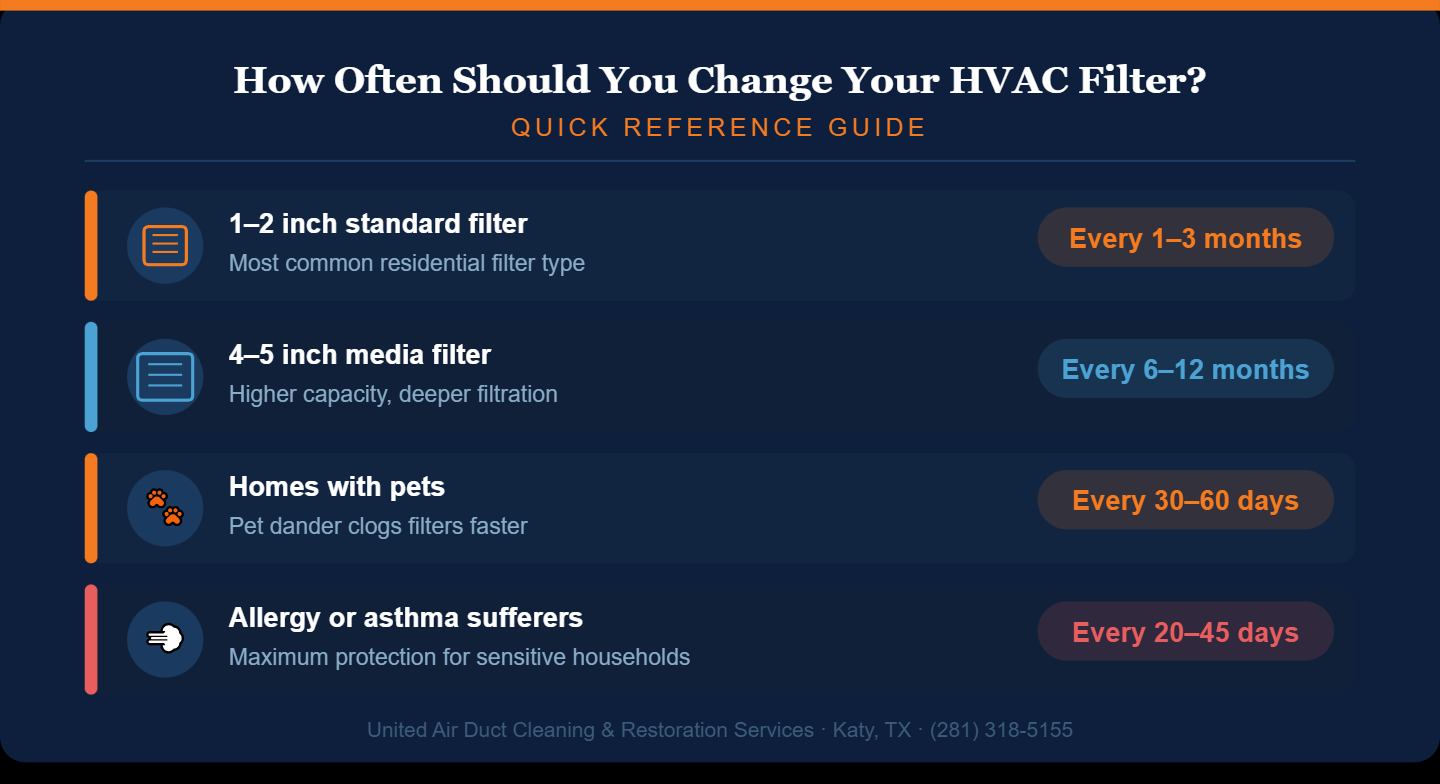
There’s no one-size-fits-all answer, but here are the general guidelines most HVAC professionals recommend:
| Filter Type | Replacement Frequency |
|---|---|
| 1–2 inch standard filter | Every 1–3 months |
| 4–5 inch media filter | Every 6–12 months |
| HEPA filter | Every 12–18 months |
| Homes with pets | Every 30–60 days |
| Allergy or asthma sufferers | Every 20–45 days |
| Single person, no pets | Every 6–12 months |
Pro tip: Always check the filter manufacturer’s specific recommendation, as filter efficiency ratings (MERV ratings) can vary greatly.
Signs Your HVAC Filter Needs to Be Changed Now
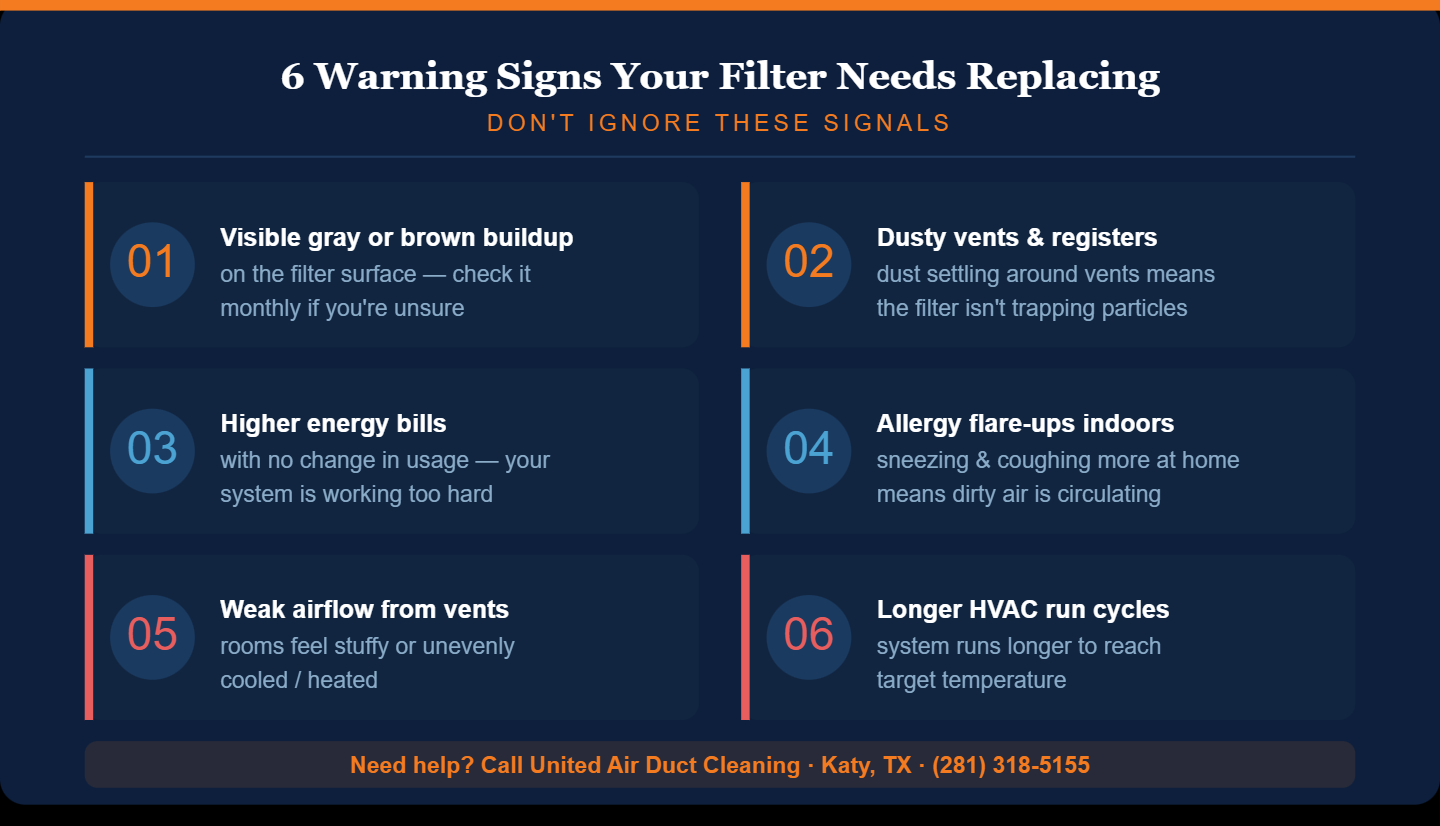
Not sure if it’s time? Watch for these warning signs:
- Visible gray or brown buildup on the filter surface
- Dusty vents or registers throughout your home
- Higher-than-usual energy bills with no change in usage
- More frequent sneezing, coughing, or allergy flare-ups indoors
- Weak airflow from your vents
- Your HVAC system running longer cycles than normal
If you notice any of these, check your filter immediately — and replace it if it looks dirty.
How to Choose the Right HVAC Filter
Not all air filters are created equal. When shopping for a replacement, look at the MERV rating (Minimum Efficiency Reporting Value):
- MERV 1–4: Basic filtration, captures large particles only. Not recommended for most homes.
- MERV 5–8: Good for most residential homes — captures dust, mold spores, and pet dander.
- MERV 9–12: Better filtration, ideal for allergy sufferers. Captures fine particles and some bacteria.
- MERV 13–16: Hospital-grade filtration. Best for sensitive individuals, but requires your system to support higher resistance.
Important: Higher MERV doesn’t always mean better for your system. Using a filter with too high a MERV rating can restrict airflow and strain your HVAC unit. Consult a professional if you’re unsure.
Step-by-Step: How to Change Your HVAC Filter
Changing your HVAC filter is a simple DIY task that takes under five minutes:
- Turn off your HVAC system before removing the old filter.
- Locate the filter slot — usually found at the return air vent or inside the air handler unit.
- Note the size printed on the filter frame — you’ll need the exact dimensions for replacement.
- Slide out the old filter and dispose of it in a sealed bag to avoid releasing trapped particles.
- Insert the new filter, making sure the airflow arrow on the filter frame points toward the blower motor (away from the return air duct).
- Turn your system back on and note the date — set a reminder for your next change.
HVAC Filter Maintenance: Set a Reminder and Save Money
The easiest way to stay on top of HVAC filter replacement is to set a recurring reminder on your phone. Keep one or two spare filters at home so you’re never caught without one.
Regular filter changes are one of the most cost-effective forms of HVAC maintenance available. A $10–$20 filter can prevent thousands of dollars in system repairs and keep your home comfortable year-round.
When to Call an United Air Duct Cleaning Professional
If you’ve been regularly changing your filter and still notice poor airflow, rising energy bills, or inconsistent temperatures, it may be time for a professional HVAC inspection. Issues like dirty coils, refrigerant leaks, or ductwork problems won’t be solved by a filter change alone.
United Air Duct Cleaning offers comprehensive HVAC maintenance services to keep your system running at peak efficiency. Contact us today to schedule an inspection or tune-up — and breathe easier knowing your home is in good hands.